

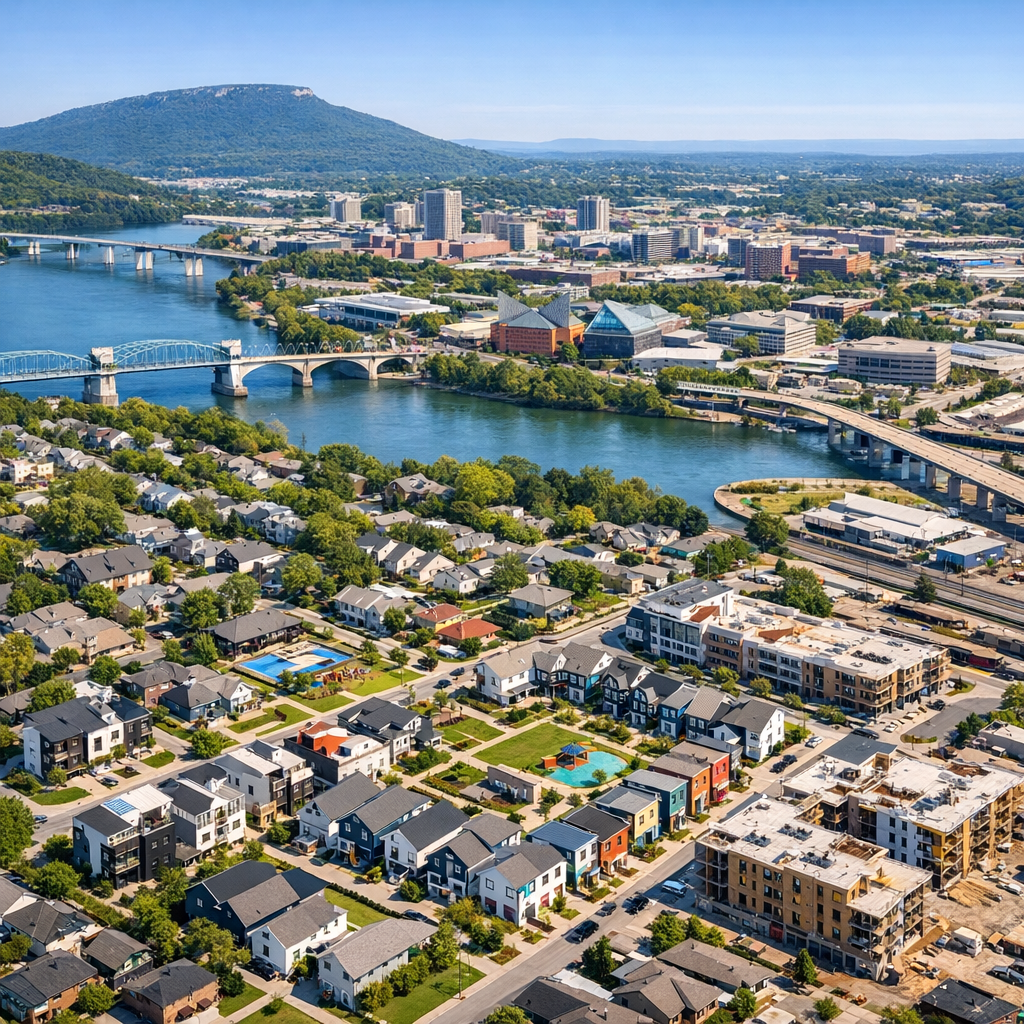
Chattanooga is experiencing significant growth, attracting new residents and businesses. However, this expansion has led to a pressing affordable housing crisis, raising concerns about gentrification and displacement among long-standing communities.
Rising Housing Costs
Home prices in Chattanooga have seen a substantial increase, with the average price reaching $313,143 as of December 31, 2025. This surge has made it increasingly difficult for working families to find affordable housing options. Additionally, the cost of building homes has risen by 50% since 2018, further exacerbating the affordability issue.
Community Concerns and NIMBYism
As new developments emerge, some residents have expressed resistance, a phenomenon known as NIMBYism (Not In My Backyard). Concerns include traffic congestion, school overcrowding, and environmental impacts. While these apprehensions are valid, they can also hinder the development of much-needed affordable housing solutions.
Impact on Vulnerable Populations
Low-income families and marginalized communities are disproportionately affected by the housing crisis. Many are being priced out of their neighborhoods, leading to increased homelessness and economic instability. In response, local organizations are advocating for policies that prioritize affordable housing and protect vulnerable residents from displacement.
Moving Forward
Addressing Chattanooga’s affordable housing crisis requires a collaborative approach involving city planners, developers, and community members. By fostering open dialogue and implementing sustainable development practices, Chattanooga can work towards a future where growth benefits all residents, ensuring that the city remains a vibrant and inclusive place to live.