

By James Anderson
Four Seasons, One Valley
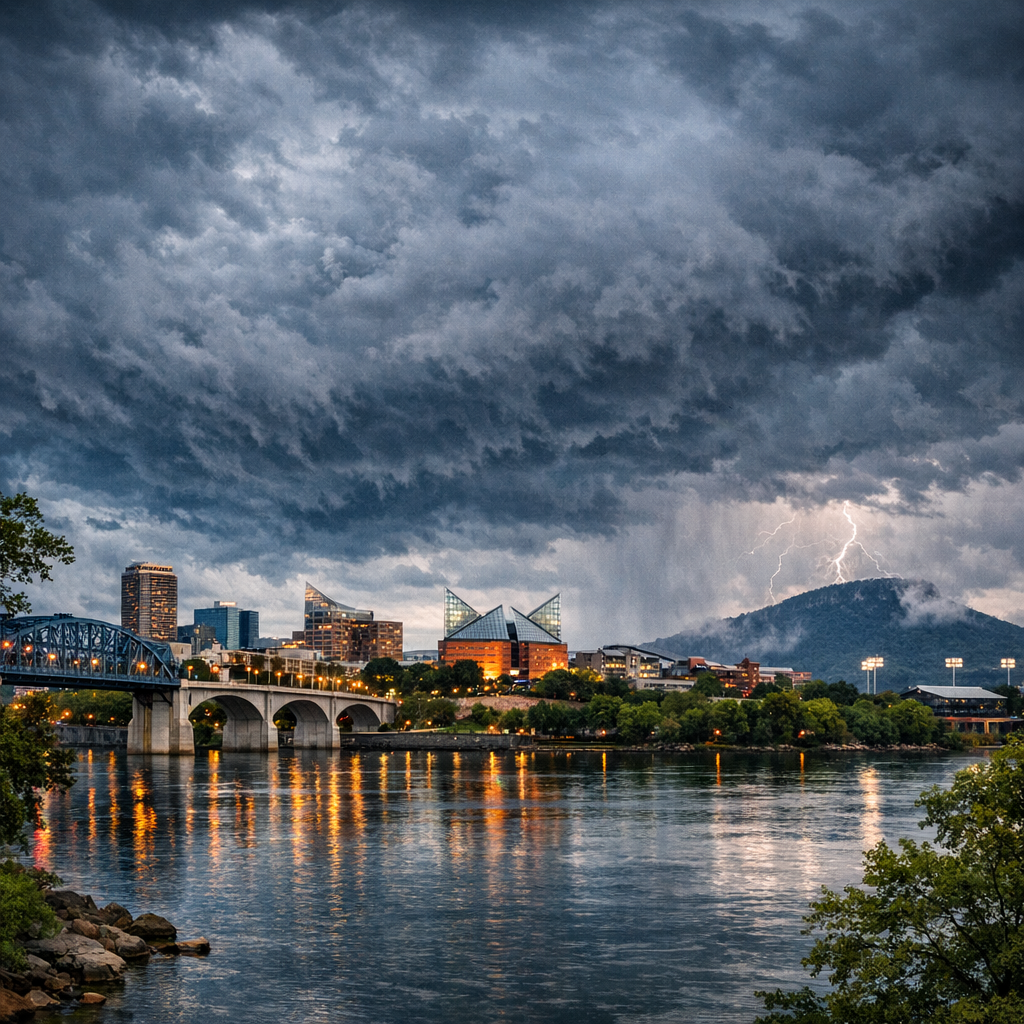
Chattanooga experiences a classic humid subtropical climate—hot, humid summers; mild winters; and clear distinct transitions between spring and fall. July highs regularly reach the upper 80s °F, with some days pushing into the 90s, and January lows often dip into the upper 20s or low 30s. Temperatures below zero are rare. Snowfall varies widely, and when it does accumulate, it typically melts within a few days. Across the year, rainfall is well distributed, with a winter–spring wet season and midsummer thunderstorms contributing significant moisture.
This variety isn’t just pleasant—it deeply shapes life in our region. Gardening, outdoor recreation, infrastructure needs, and even energy usage all follow the rhythm of the seasons.
Shifting Patterns: Rain, Heat, and Extremes
Long-term climate projections suggest Chattanooga may be getting more of both extremes. Rainfall is expected to increase modestly, especially during spring and fall, while the number of extremely hot days—those over 95 °F—is projected to rise sharply. By mid-century and beyond, what were once rare heatwaves could become common.
Heavy rainfall events are likely to become more frequent as well, increasing concerns about flash flooding, stormwater runoff, and water quality—particularly in urbanized zones with lots of pavement and fewer green spaces.
The Role of Urban Growth and Environment
Chattanooga has seen growing development in recent decades, and that growth brings both opportunity and risk. Impervious surfaces—roads, rooftops, concrete—have increased significantly, while urban forests have shrunk by tens of square miles. This change affects local stormwater absorption, heat retention, and air quality, particularly in neighborhoods low-lying or densely built.
What This Means for Residents
- Design for rain: Consider rain gardens or permeable paving for your property to reduce runoff during heavy storms.
- Shade and cool: Trees aren’t just lovely—they help reduce indoor heat and lower energy bills. Protect existing shade and plan for more.
- Watch for heatwaves: Know the signs of heat illness, and have plans to stay cool during sudden spikes above 95 °F.
- Prepare for changing seasons: Frosts arrive in early November on average; last spring freezes tend to happen around early April—those dates are essential for gardeners and farmers.
Looking Ahead With Resilience
Efforts are already underway locally—resilience planning, climate action strategies, and conservation play key roles in adapting to the changes ahead. Protecting our urban forests, reducing emissions, and managing water more sustainably will help Chattanooga not just endure, but thrive as our climate evolves.
Seasons may change, but our connection to them is constant. By understanding how climate shapes our city—from Tennessee Valley storms to summer heat and neighborhood microclimates—we can better steward our community and environment.